 Royse City Drywall Repair Co.
Settling cracks
Diagonal cracks at door and window corners and split seams, opened, reinforced and refinished.
How settling cracks are repaired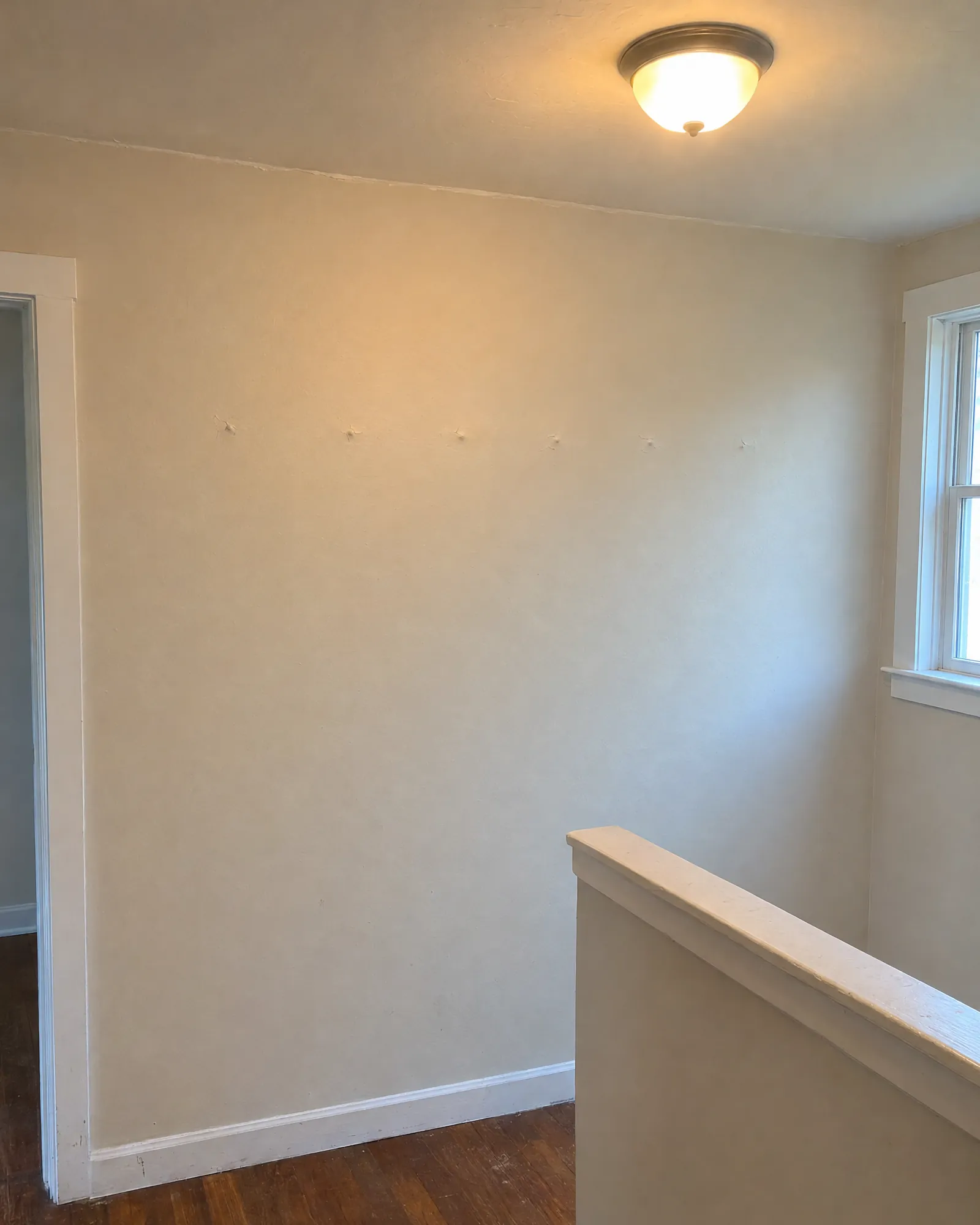
Drywall and ceiling repair · Royse City, Texas
Royse City Drywall Repair Co. attends to the faults that newer houses tend to develop as they settle: cracks at door corners, screws pushing through paint, and patches that need knockdown or orange-peel texture before they will disappear. Please tell us what you are seeing, and we will arrange a visit at a time that suits your household.
Each repair below has its own page describing how we approach it in houses around Royse City. If a wall shows more than one of these at once, which is common after a dry spell, please mention all of them and we will plan the visit accordingly.
Diagonal cracks at door and window corners and split seams, opened, reinforced and refinished.
How settling cracks are repairedRound bumps and cracked circles over fasteners, reset with new screws and finished flat.
How popped fasteners are resetSprayed texture blended over patches, with a sample board tested before your wall is touched.
How sprayed texture is matchedDoorknob holes, anchor holes, torn paper and crushed outside corners, patched and blended.
How holes and corners are patchedStained, soft or sagging board from roof, plumbing or air-conditioning leaks, tested, cut out and replaced.
How water-damaged drywall is replacedCeilings are harder to repair than walls, because the work is overhead, the light falls across them at a low angle, and sprayed ceiling textures are difficult to blend. The marks we are most often asked about fall into a few groups.
Most of the cracks above are handled the same way as cracks in walls, and the page on wall and ceiling crack repair describes the method step by step.
You are welcome to send the photographs by text message, or to describe the damage in the form at the foot of this page.
Stain-blocking primer matters here, because ordinary paint over a water ring often lets the ring bleed back through. The page on replacing water-damaged drywall covers this in more detail.
We arrive within the window confirmed the day before, look at the damage with you, and confirm what will be repaired and painted.
Floors are covered with drop cloths and nearby furniture is moved or wrapped. Doorways may be sheeted with plastic when sanding is involved.
Cracks are opened and cleaned, loose tape is cut away, popped fasteners are reset, and damaged sections are cut back to framing.
Tape and compound go on in thin coats. Each coat needs time to set, which is why most repairs need a second, shorter visit.
Drying time depends on humidity and on the compound used. Setting-type compound shortens the wait, and we will tell you which we are using.
Texture is applied and allowed to cure, the patch is primed, and the room is vacuumed and left as we found it. Painting is arranged with you in advance.
Royse City sits mostly in the northeastern corner of Rockwall County, the smallest county in Texas by area, and it extends north into Collin County and east into Hunt County. A short drive in almost any direction crosses a county line. Alongside the city itself, we visit these communities:
Each town has its own short entry on the page listing the towns we serve.
Two repairs that sound alike can differ a great deal once these factors are weighed, so we explain the scope of work after seeing photographs or the wall itself, and before anything begins.
Fresh joint compound is far more absorbent than painted drywall. If finish paint goes straight over it, the patch takes up the paint differently and shows as a dull or glossy shape whenever light crosses the wall. This is called flashing, and it explains most repairs that remain noticeable after painting.
To prevent it, every patch is sealed with primer before paint. Texture goes on before the primer, so the primer seals both. Sheen is then matched: flat, matte, eggshell and satin each reflect light differently, and a patch painted in the wrong sheen will show even when the color is exact. If the original paint is unknown, a small chip can be taken to a paint store for matching.
Painting can be included or left to you. If you prefer to paint yourself, we will leave the patch primed and let you know when it is ready for a finish coat. Our notes on blending a patch into existing paint explain the reasons in more depth.
Most of Royse City is new. Census estimates for 2020 to 2024 count about 7,100 housing units in the city, and roughly 5,600 of them were built in 2000 or later, with nearly 1,700 built in 2020 or later alone. The chart shows how sharply the numbers rise in the most recent decades.
The town itself is much older. It was settled in 1885, when the railway came through, and the same estimates count a few hundred homes built before 1970. Those houses can hold different materials: thinner board, older joint compound, plaster in places, and layers of paint that may predate 1978. Paint from before 1978 can contain lead, so in those rooms we keep dust contained, avoid dry sanding of old paint, and discuss testing with you before any old finish is disturbed.
Older and newer houses alike sit on dark blackland clay, whose volume changes with its moisture. That movement is the main reason cracks reappear at the same door corners after a dry spell, whatever the age of the house.
If you manage rental property in or around Royse City, we are glad to work around turnovers and tenants.
Interior walls in houses of the age most common here are usually half-inch gypsum board. Ceilings may be half-inch sag-resistant board or thicker five-eighths board, bathrooms may use moisture-resistant board, and a wall shared with an attached garage normally uses fire-rated board. Any replacement piece is matched like for like.
Two families of compound do most of the work. Setting-type compound, mixed from powder, hardens chemically and shrinks very little, so it is used for filling and for bedding tape. Premixed lightweight compound sands easily and is used for the final, thin coats.
The page on matching knockdown and orange-peel texture describes how a sample is tested before your wall is sprayed.
Please describe the damage below, or telephone during the hours shown. We will reply to confirm a visit and the details of the repair.
Hours: Open 7 days, 7am–9pm